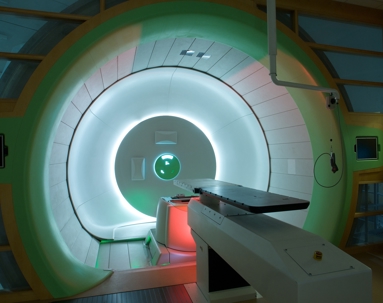
Proton beam therapy is an emerging form of radiation treatment that is being studied for patients with malignant pleural mesothelioma. Unlike conventional radiation therapy, which uses photons/X-rays that pass through the body, proton therapy uses positively charged particles (protons) that can be programmed to release most of their energy directly inside the tumor.
This precision allows doctors to deliver high doses of radiation to cancer cells while reducing exposure to nearby organs such as the heart and healthy lung tissue. Because mesothelioma tumors often spread along the lining of the lung close to critical organs, the ability to limit radiation to surrounding tissue is particularly important.
Recent research highlighted at University College London Hospitals (UCLH), as reported by the BBC, has drawn attention to a major clinical trial evaluating proton beam therapy for mesothelioma. The UK has one of the highest incidence rates of mesothelioma in the world. Researchers are investigating whether the technology can improve survival outcomes by enabling more effective radiation treatment of the pleural lining where the disease typically develops. If successful, doctors believe proton therapy could change how mesothelioma is treated in the UK and provide “realistic hope.”
The trial reflects growing interest in proton therapy as a potential advancement in the management of this aggressive asbestos-related cancer. Scientists hope the approach could significantly improve outcomes compared with conventional radiation, with some researchers suggesting that survival rates could potentially improve if the therapy proves effective in larger studies.
Is Proton Beam Therapy Used for Mesothelioma in the United States?
Yes—proton beam therapy is available in the United States, though its use for mesothelioma is still evolving. Several specialized cancer centers operate proton therapy facilities and may offer the treatment to mesothelioma patients as part of a multimodal treatment plan that can include surgery and chemotherapy. In many cases, proton therapy is delivered after surgery to destroy remaining cancer cells or to treat localized tumors that cannot be removed surgically. Clinical trials at major U.S. institutions continue to study the effectiveness and safety of proton therapy specifically for mesothelioma patients.
While proton therapy is not yet considered a standard treatment for all mesothelioma cases, ongoing research suggests it may offer meaningful benefits for carefully selected patients. As clinical trials continue and technology advances, proton beam therapy may become an increasingly important option in the multidisciplinary treatment of asbestos-related cancers.